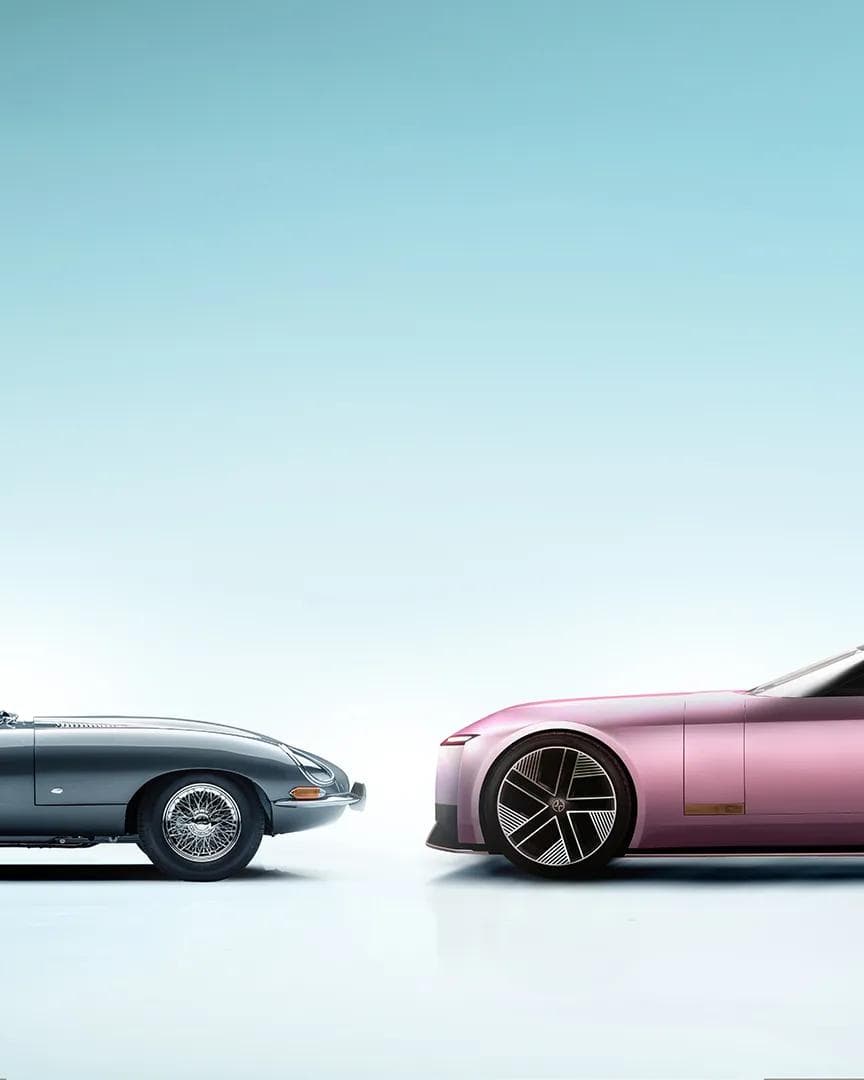
AI has made competent copy free, and identical. When every brand uses the same tools, distinctive voice becomes the last real differentiator.
Open ten product pages in your category and hide the logos. Read the copy and try to match each page to its brand. Most people cannot, and the interesting question is not why the copy converged but what that convergence costs. The cost is real, and it never appears as a line in any budget.
The convergence has a mechanical explanation. Generative models are trained towards the statistical centre of the text they have seen, and the fine-tuning that makes them pleasant to use pushes them further towards whatever human raters find clear, agreeable and safe. A synthesis published in Trends in Cognitive Sciences in March 2026 collected evidence across linguistics, psychology and computer science and found that these models reflect and reinforce dominant styles while marginalising alternative voices, and that the effect is amplified as more people rely on the same few tools across contexts.
In practice, every brand that pastes a brief into the same model receives a variation of the same paragraph. What is easy to miss is that distinctiveness used to arrive by accident. Different copywriters had different moods, habits and blind spots, and that unmanaged variation kept brands apart without anyone deciding it should. Generative tools remove the accident, so the variation now has to be deliberate or it will not exist.
The commercial cost follows directly. When your product descriptions, welcome emails and About page are interchangeable with your competitors', the customer compares on the one variable that still differs, which is price. Generic copy is not a neutral saving; it quietly repositions the brand as a commodity. We see this most clearly in e-commerce, where two Shopify stores selling similar products at similar prices can perform very differently over time, and the one with a recognisable voice tends to win the retention numbers rather than the first click. The first click is bought, but the second visit is earned by sounding like someone in particular.
The obvious objection is that customers skim, and nobody buys a jacket because the product page had personality. That is true of any single page, but voice works cumulatively, and cumulative effects rarely show up in a single A/B test.
The practical implication is that voice has moved from a craft preference to a specification. If a model writes most of your copy, the only distinctiveness it will produce is the distinctiveness you document, feed it and edit against. That is real work, and in most organisations nobody currently owns it. If you want a second opinion on where your own copy sits, we are happy to take a look.
Source: Sourati et al., "The homogenizing effect of large language models on human expression and thought", Trends in Cognitive Sciences, March 2026. cell.com/trends/cognitive-sciences