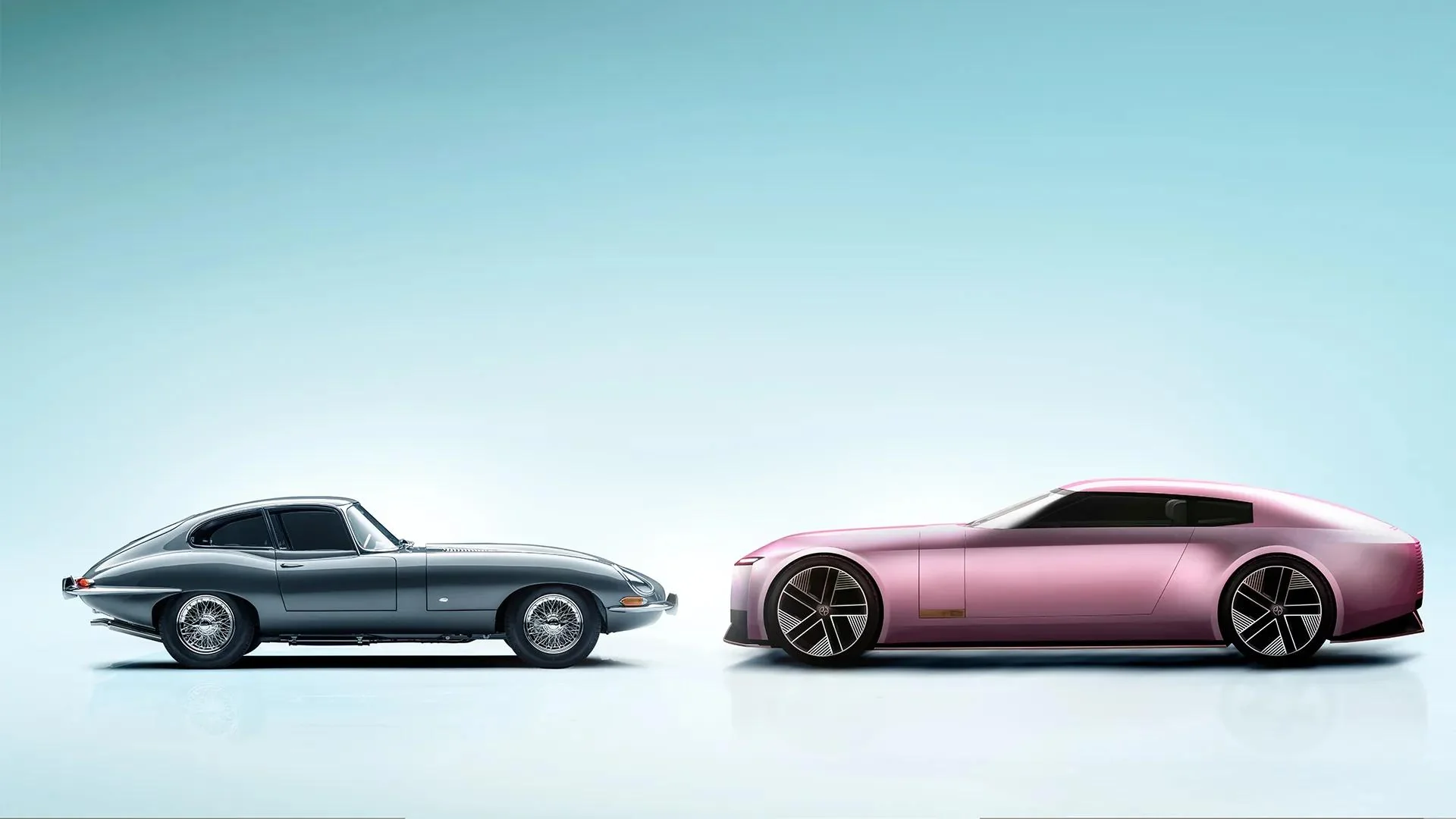
The new Jaguar drew real criticism for its look, and fairly. But underneath sat a second design lesson about what you take away, and in what order.
Nearly two years on from the launch, plenty of people still simply don't like the new Jaguar. The logo landed badly, the cars divided opinion, and not caring for either is a fair reason to sour on a rebrand. But there was a second problem sitting underneath the design one, and it's the more useful one to learn from, which is the order things happened in. Jaguar deleted its heritage, its social history and the leaping cat, then asked people to believe in a car that wasn't there yet. That's not boldness, that's a gap, and customers fell into it.
The most quoted number, 49 cars registered in Europe in a single month, is less damning than it looks, since Jaguar had deliberately paused sales while it moved to an electric lineup, so there was little to buy. But the softer truth underneath is still a warning. The brand spent its recognition before it had anything to sell in its place, and recognition is the one asset you can't rebuild on a launch timeline.
Take away everything familiar and the future feels cold
This points to something we see in design well beyond cars. When a new look strips away every familiar signal in the name of the future, it reads as cold rather than advanced. The car industry is learning this the hard way right now, as buyers push back on all-glass, button-free cabins and brands like Volkswagen and Porsche quietly return physical controls. The same holds for a logo, a website or an interface. People will follow you somewhere new, but they want one or two familiar things to hold on to on the way. Jaguar removed all of them at once.
What they got right, and what they didn't
We'll give them one thing, moving at all was defensible. Jaguar was barely selling cars, its core buyers were ageing out, and standing still was just a slower way to disappear. On that much, the brand's managing director was unrepentant:
"A new Jaguar shouldn't land and everybody goes, yeah that's nice. We are fine with polarising. What we shouldn't do is try and be loved by everybody, you'll end up with vanilla."
Fine in theory. The catch is that polarising means half the room loves it. What Jaguar got was closer to a room that mostly agreed, and agreed it didn't like it. That isn't dividing opinion, it's uniting it against you, and then calling the result bravery.
It's a stance that ages interestingly, too. Over the year that followed, Jaguar changed advertising agency, lost its design chief and saw its CEO retire, while the parent company cut hundreds of management jobs. None of that need have anything to do with the rebrand, and we're not saying it does. But "we are fine with polarising" carries a little differently when a fair few of the people who said it are no longer around to say it again.
So our take is simple. The instinct to move was right, the thing they moved to mostly wasn't, and "we wanted to polarise" is what you say afterwards when it didn't land. Bold only works when you're bold towards something people actually want, and when you open the new door before bricking up the old one. That's true of a car, and it's just as true of a logo or a website. Change the brand, but give people something to hold on to while the new thing arrives. If you're weighing a reset like that, we're happy to talk it through.
Source (quote): Design Week, "'We needed a complete reset' – Jaguar MD defends controversial rebrand". designweek.co.uk