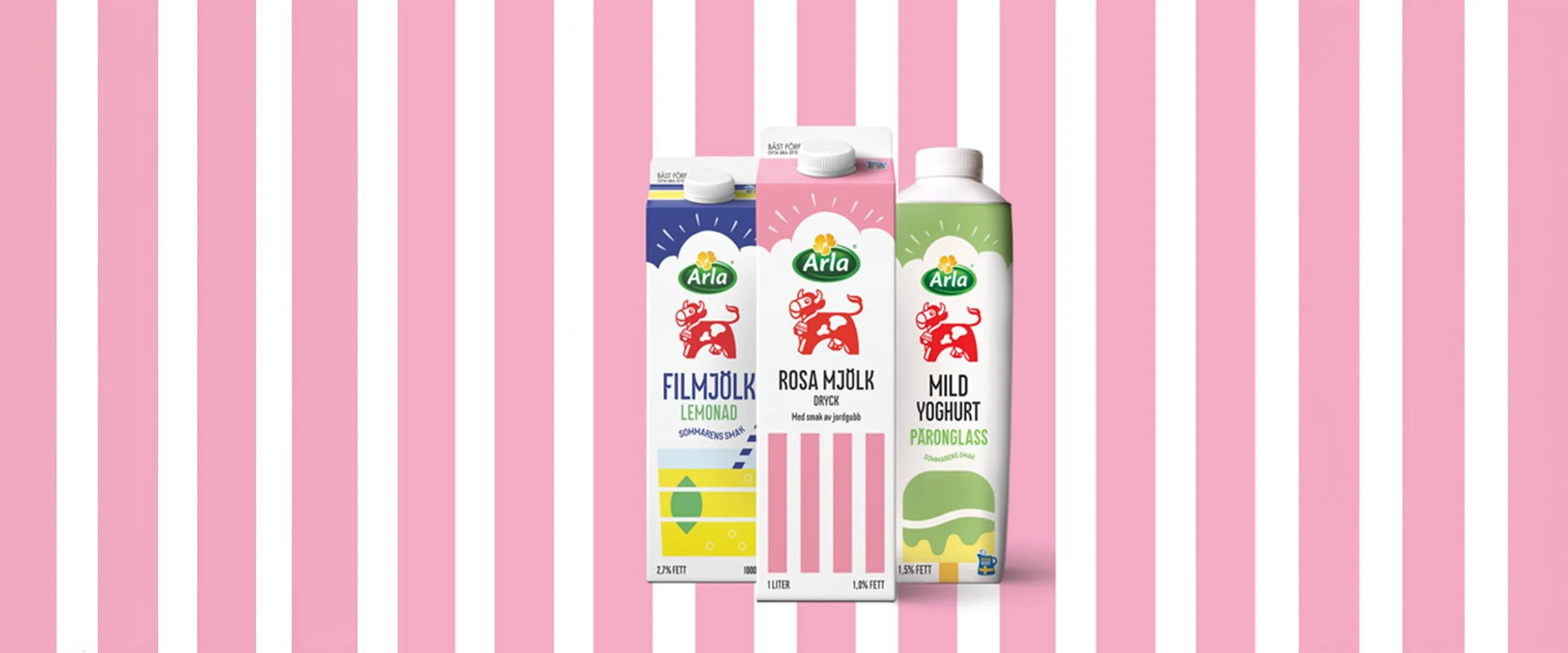
Arla's viral pink milk wasn't new. The brand had made it a decade earlier and killed it. The idea didn't change, the timing did.
The most-shared product in Sweden this summer was a carton of strawberry milk. Arla's pink milk went viral on TikTok within days of its April release, sold out across the country, and had a dairy in Linköping running around the clock to keep up. At a tasting in Kungsträdgården the brand handed out 25,000 samples and collected 2,000 flavour suggestions for next year. For a pink carton of milk, that's a remarkable amount of noise.
Here's the part most people missed. Arla had sold pink milk once before, roughly a decade ago, and quietly discontinued it because it didn't sell well enough. Same product, same colour, same idea. The recipe wasn't the breakthrough. The timing was.
The archive is an asset, not a graveyard
We think brands treat their own history as a graveyard when it's closer to a warehouse. When something gets cut, the usual story is that it failed, and everyone moves on to invent the next thing. But plenty of ideas weren't bad, they were early. The audience wasn't ready, the channel didn't exist yet, or the culture hadn't circled back to want it. A product that flopped in 2015 is not the same product in 2026, because the world it launches into is different.
The evidence for this is not subtle. Discontinued brands are being pulled off the shelf of history everywhere you look, from PepsiCo's Slice soda returning after more than twenty years to a wave of retro food and beauty relaunches. One study tracking 380 revived products found limited-run comebacks drove a 31% average lift in repeat purchases within two months, with old snacks and sweets performing best of all. Familiarity is doing work that a brand-new launch has to pay for from scratch.
None of this means every dead idea deserves resurrection. Some things were cut because they genuinely didn't work, and no amount of nostalgia fixes a bad product. The skill is in telling the two apart: the idea that failed on its merits, and the idea that simply arrived before its audience did. The second kind is the one worth digging out.
So before the next brainstorm reaches for something entirely new, it's worth asking a cheaper question first. What did we already try, believe in, and shelve, and has the world moved far enough for it to land this time? The answer might be sitting in a folder someone marked "discontinued" and never opened again. If you want help working out which of your old ideas is actually an early one, we're happy to talk it through.